RENO-TITAN: Utilisation of NORM residues from the titanium industry in Vietnam

April 2023: Titanium-bearing minerals are used to produce white pigment and specialised products for applications ranging from medicine to aerospace. These minerals are often extracted from heavy mineral sands, which can lead to the enrichment of naturally occurring radioactive materials. The CLIENT II project RENO-TITAN investigates the framework conditions as well as technological and management-based methods for the sustainable and hazard-free utilisation of residues from the titanium industry in Vietnam. In the medium term, the project aims to help make Vietnam’s titanium industry fit for the future.
Titanium mining as an opportunity and a risk for Vietnam
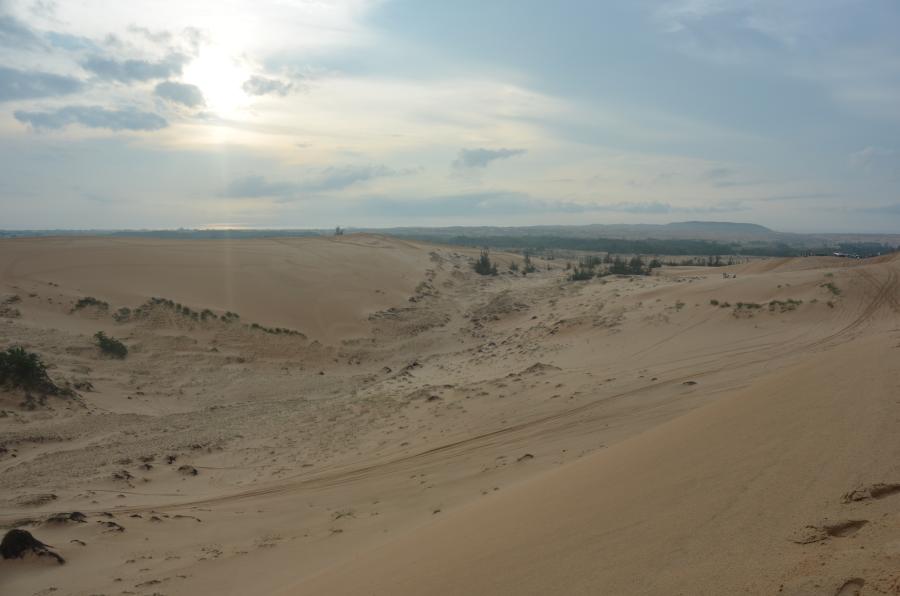
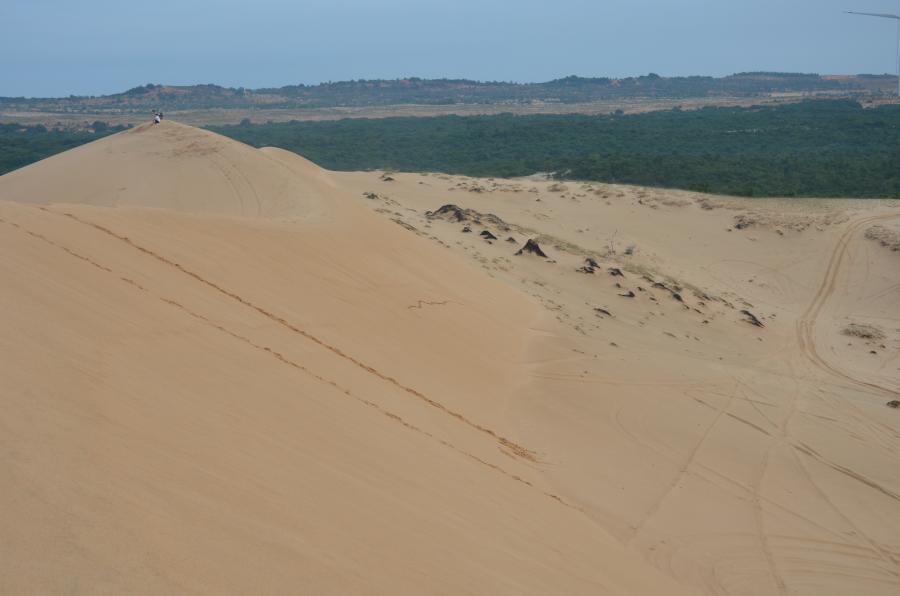
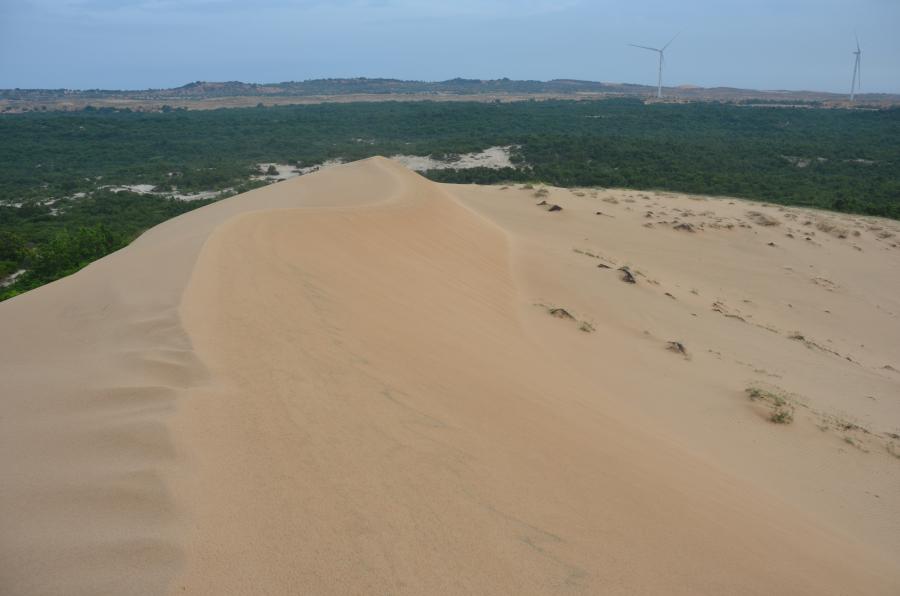
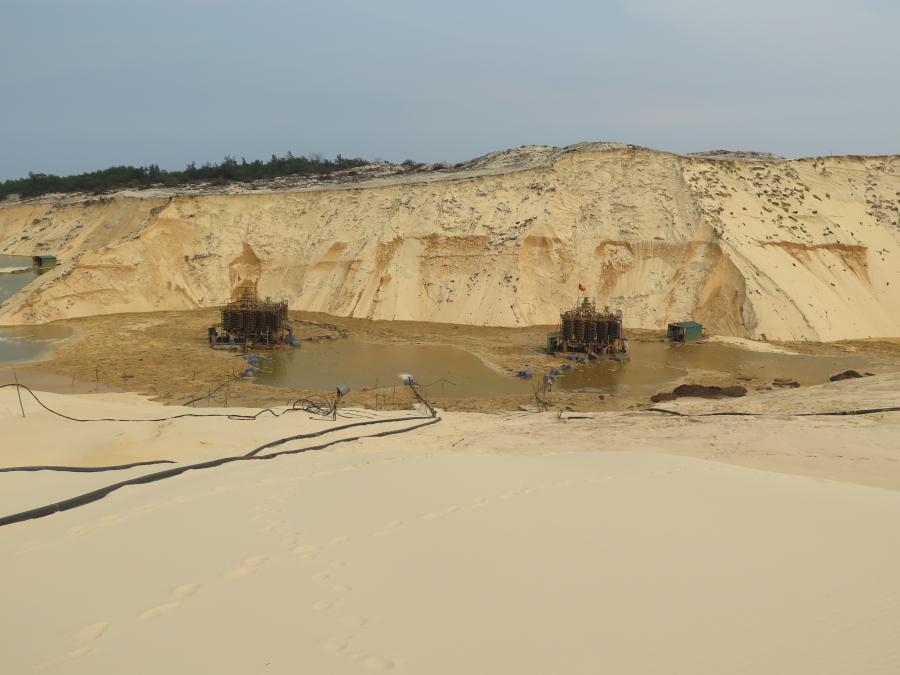
Titanium dioxide pigment is the most important white pigment. Due to its strength, corrosion resistance and low weight, titanium metal is an important material in aerospace, shipbuilding and seawater desalination plants. Although titanium is the ninth most abundant element in the Earth’s crust, only a few countries have concentrated titanium deposits. Vietnam is one of them. Heavy minerals such as ilmenite — titanium iron ore — commonly occur in coastal sands, dune sands and the sandy soils of coastal forests. However, the mining of these sands leads to numerous conflicts over land use and can have negative impacts on people and the environment. The washing out of heavy mineral sands consumes and pollutes enormous quantities of groundwater, which is then no longer available for agriculture and other sectors. This contributes to the deeper intrusion of seawater. The problem is further exacerbated by an increasing trend towards drought in some Vietnamese provinces.
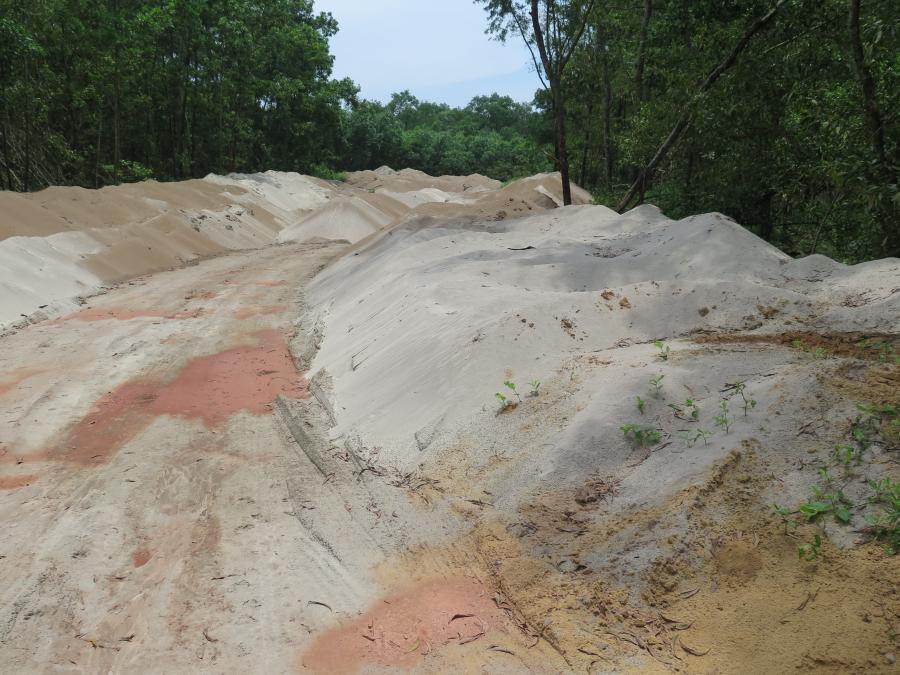
 However, another problem that lies at the heart of RENO-TITAN has so far received little attention: radioactive accessory minerals can become enriched during the processing of heavy mineral sands. The handling of naturally occurring radioactive materials, known as NORM, is still insufficiently understood in Vietnam, and existing regulations are sometimes implemented disproportionately due to a lack of knowledge. The joint project focuses on the following questions:
-
How can technological and management measures reduce negative impacts on people and the environment during the extraction and processing of titanium-bearing minerals?
-
What sustainable and therefore economically attractive utilisation options exist for NORM waste from mining in Vietnam?
-
What occupational health and safety precautions are needed when handling NORM residues in order to ensure that their utilisation is also safe from a health protection perspective?
On ore and streaks: Putting tailings from titanium mineral processing to the test
The RENO-TITAN partners are investigating the utilisation and disposal of NORM waste from three perspectives:
- First, they will examine building blocks for a regulatory framework — from the national level, which governs the handling of these materials, to the operational level in laboratories, where the quality and comparability of radiological measurements must be ensured.
- Second, they will conduct detailed environmental assessments of current titanium extraction in Vietnam and explore options for the further use of NORM residues. This includes, for example, life-cycle-based as well as economic assessments to identify the most sustainable options and coordinate them with Vietnamese authorities. For RENO-TITAN, close cooperation with companies and authorities in the Vietnamese province of Binh Thuan is planned.
- The third focus is on the process-engineering implementation of economically attractive options. Immobilising materials are intended to enable the long-term safe disposal of NORM residues. Laboratory-level cooperation between German and Vietnamese partners is planned for this purpose.
From waste to resource: radioactive residues as substitute construction materials? Radioactive residues as substitute building materials? The predecessor CLIENT-II-Projekt SAND had already addressed the issue of sand scarcity in Southeast Asia and the increasing extraction of sand from sensitive ecosystems such as the Mekong Delta. In order to reduce pressure on natural resource extraction, substitute construction materials made from mining residues that are generated anyway could represent a win-win opportunity. RENO-TITAN therefore addresses not only clean production, occupational safety and the hazard-free disposal of hazardous waste, but also the question of reuse in a circular economy. Vietnamese stakeholders are provided with concrete knowledge and practical skills for implementation, using titanium extraction and processing as an example of how mining activities can be made fit for the future.
| Voriger Beitrag | Zurück zur Übersicht |