Station 02: Asse II near Wolfenbüttel: The importance of transparency
The Asse II mine is a prime example of how Germany deals with challenging legacy issues: due to water ingress, BGE, the Federal Company for Radioactive Waste Disposal, is retrieving the radioactive waste stored there in the 1960s and 1970s – a technically and socially demanding project, unique worldwide, that also involves civil society.
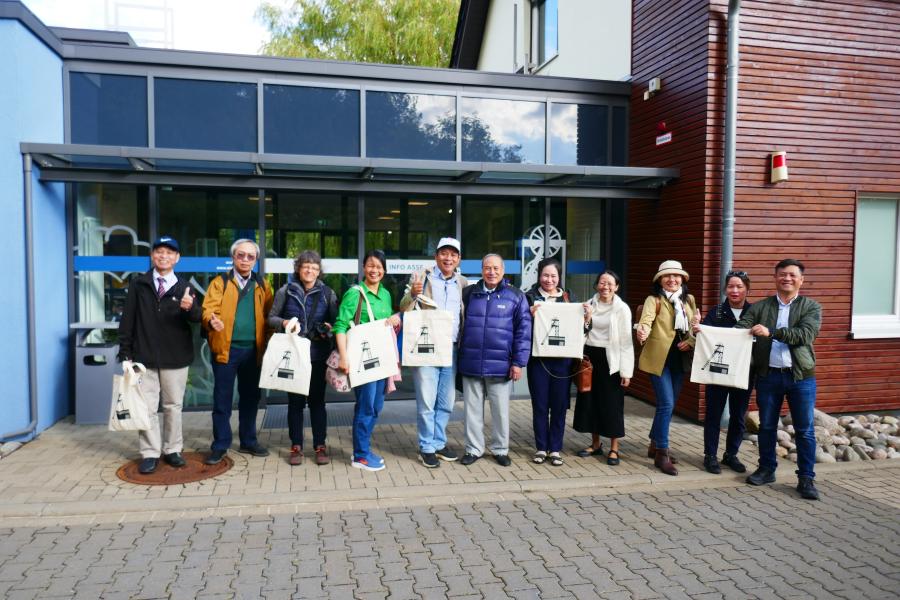
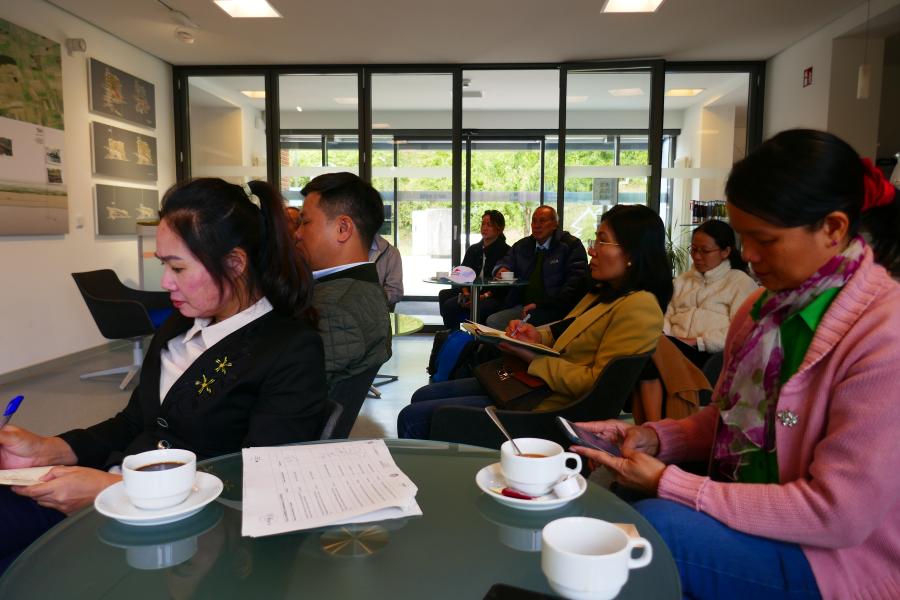
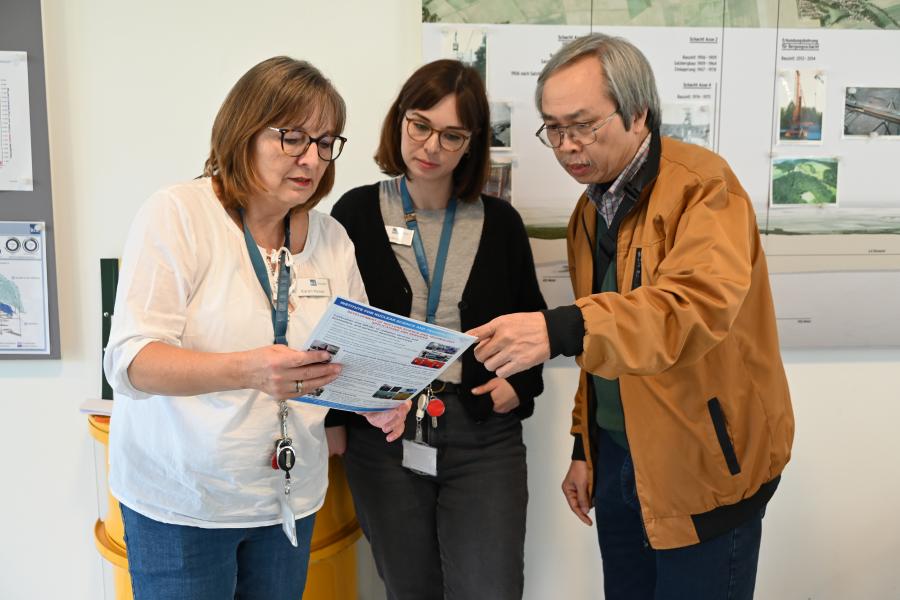
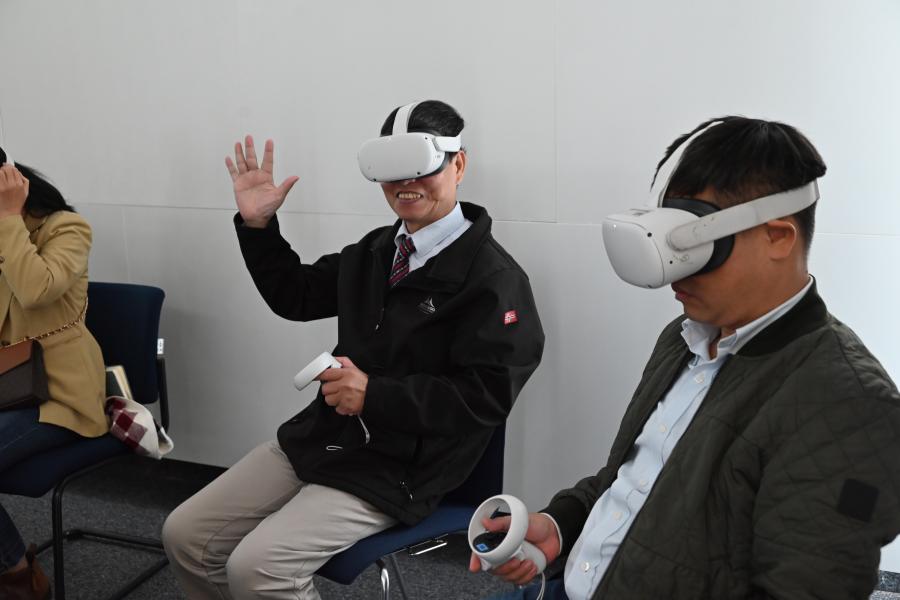
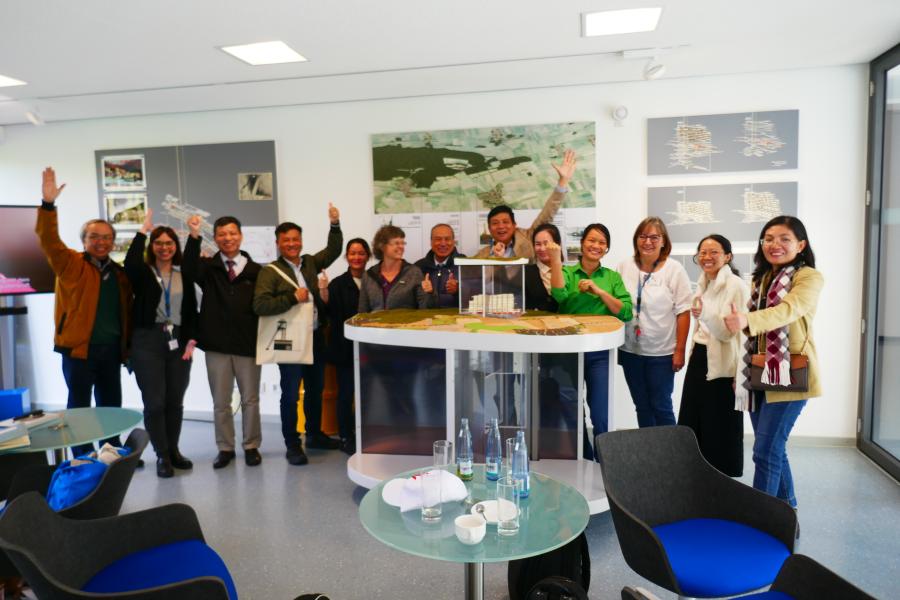
The Asse II mine provided the group with a prime example of how Germany deals with difficult contaminated sites. The Federal Company for Radioactive Waste Disposal (BGE) has been responsible for operating the facility since 2017. A presentation at the visitor centre provided information on the history, problems and current plans. This was followed by a virtual tour of the mine with 3D glasses, which provided insights into mining chambers and sensitive areas.
Why is waste stored there at all, even though the mine is now considered unstable and salt water is seeping in? In the 1960s and 1970s, the former salt mine was considered dry and ‘self-sealing’ and was used as a test repository. Low- and medium-level radioactive waste from power stations, research, medicine and industry was stored there. The characteristic yellow barrels contained solid residues, construction waste, laboratory waste and filters and equipment embedded in binding agents. Today, it is clear that water can seep into the mine through fissures and old pit areas. As this water ingress jeopardises long-term safety, the federal government has decided to retrieve the waste – a project that is unique worldwide.
The biggest challenges can be summarised in four pointsThe biggest challenges can be summarised in four points:
- Stability: The stability of the cavities and the surrounding salt rock is ensured by filling them with supporting salt concretet.
- Water: All water inflows are recorded, collected and monitored in order to manage the risks until the waste is recovered.
- Retrieval: The containers are retrieved from narrow chambers, securely repackaged at the surface and prepared for further storage. This requires a new shaft and modern above-ground facilities.
- Precautionary measures: Clear emergency plans for unexpectedly high water inflows enable rapid safety measures to be taken, including backfilling if necessary, to protect people and the environment.
The involvement of civil society plays a special role. Regular information events are held around Asse II, measurement data is published and there is a citizen measuring station where residents can have samples tested. A 'Round Table' convenes the Federal Company for Radioactive Waste Disposal (BGE) together with regional stakeholders, including local authorities, citizen initiatives, environmental groups, and private citizens, to discuss matters relating to Asse II. This cooperation is intended to create transparency and trust.
Further Materials
Videos (English)
Explainer video with English subtitles:
Materials in German
Magazine article, written in a journalistic style on BGE’s Einblicke platform, that clearly explains options for waste treatment and interim storage after retrieval.
Stirn, A. (2022, Juli). Alles muss raus – aber wohin? [Magazinartikel]. Einblicke #14 – Magazin der Bundesgesellschaft für Endlagerung (BGE). Link to the Article
The online magazine Einblicke, published by the Federal Company for Radioactive Waste Disposal, features an interview here on radiation protection and monitoring issues concerning the Asse II mine.
Schüring, J. (2022, Juli). Vertrauen ist gut, Kontrolle ist besser [Interview]. Einblicke #14 – Magazin der Bundesgesellschaft für Endlagerung (BGE). Link zum Artikel
Information page by regional civil society on the Asse monitoring process — roles, stakeholders and developments — offering insight into participation structures.
Asse-2-Begleitgruppe. (n. d.). Der Begleitprozess Asse II [Webseite]. Link to the Website
Event report ‘Asse Aktuell’ showing how BGE communicates information and engages in dialogue with citizens, for example in June 2024.
Bundesgesellschaft für Endlagerung (BGE). (2024, 13. Juni). Bericht „Asse Aktuell“ vom 13. Juni 2024 [Veranstaltungsbericht]. Link
Citizens’ initiative from the Asse region that critically monitors the handling of Asse II, documents positions and actions, and publishes its own statements.
AufpASSEn e. V. (n. d.). AufpASSEn e. V. [Webseite]. Link to the Website
Materials in English
Current technical presentation (OECD-NEA) with an accessible project overview: history, status, retrieval concept, remote technology.
German Federal Company for Radioactive Waste Disposal (BGE). (2025, March 7). Retrieval of Radioactive Waste from the Asse II Mine [Conference presentation slides]. OECD Nuclear Energy Agency. Link
EU research consortium EURAD: overview of the characterisation of historic/legacy waste, with a brief Asse II case study.
EURAD. (2024, April 15). Review of characterisation of legacy and historical wastes (Deliverable D9.8) [Research report]. Link
Accessible factsheet on disposal in Germany – including all waste types and the Konrad repository.
Clean Energy Wire (K. Appunn). (2024, August 9). After the phase-out: Germany grapples with nuclear legacy as waste challenge remains [Factsheet]. Link
Asse II in the context of international repository projects and comparable technical, political, and regulatory challenges.
Charlier, F. (2019, October). Comparative Survey of International Repository Projects [Article]. Mining Report Glückauf, 155(5), 454–465. Link
| Voriger Beitrag | Zurück zur Übersicht |