RENO-TITAN: With the scintillator through the titanium mine

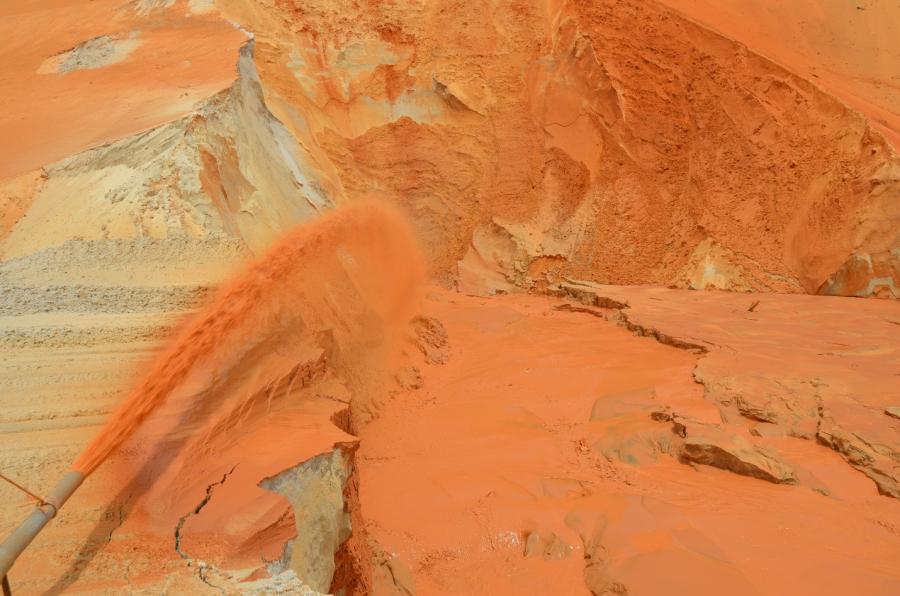
September 2023: The South Vietnamese province Binh Thuan is not only known for its dragon fruit plantations, but also for its vast dune landscapes of red and white sand. These dune landscapes can provide a particular raw material: heavy sands containing titanium- and zirconium-bearing minerals. The CLIENT II project RENO-TITAN takes a closer look at these mineral sands. Experts on environmental radiology from Vietnam and Germany collaborate in RENO-TITAN to determine whether the residues from heavy sand mining activities are radioactively contaminated.
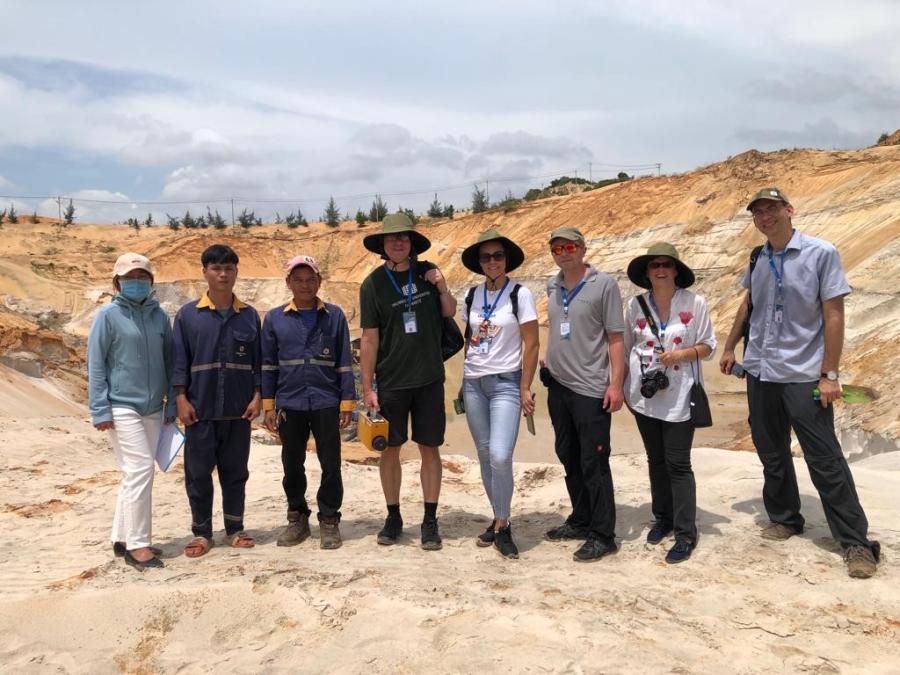
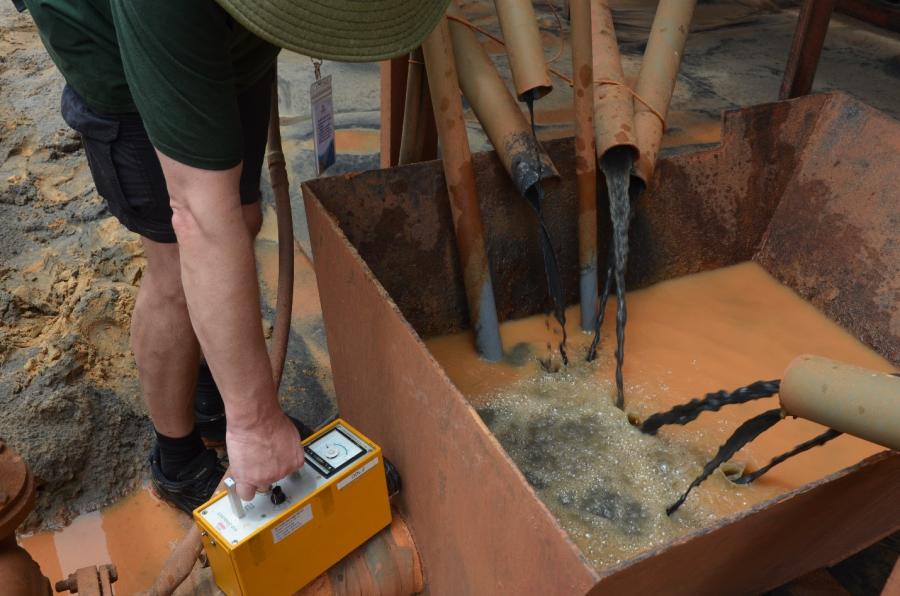
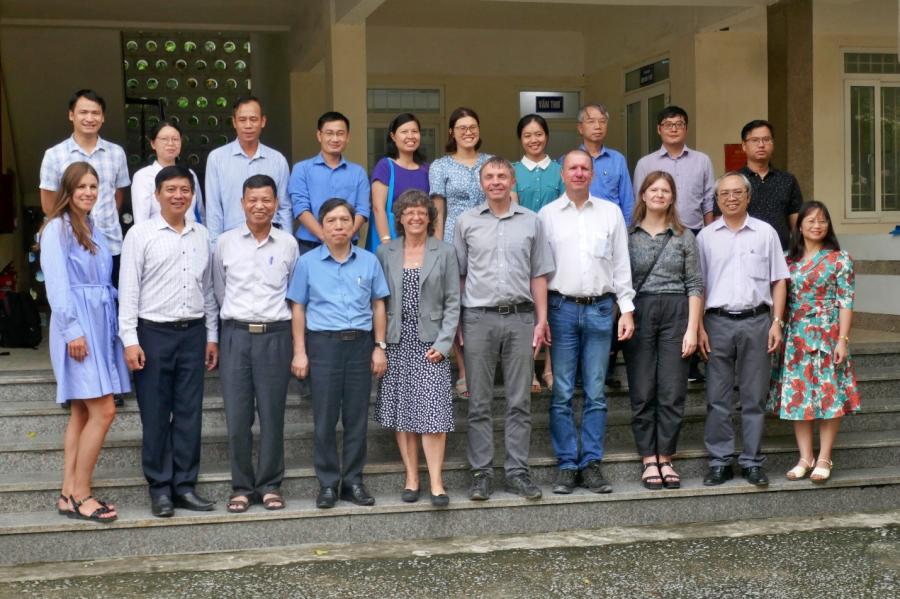
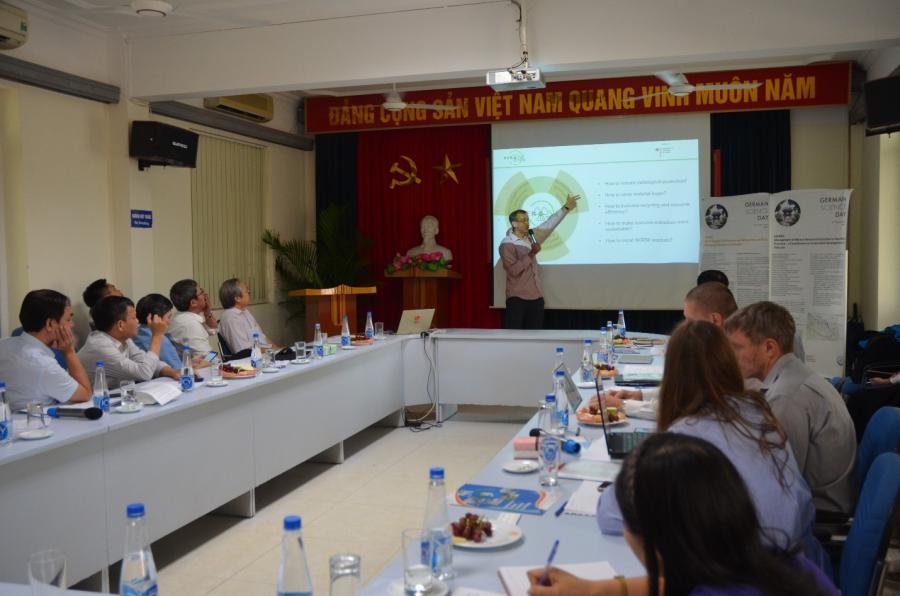
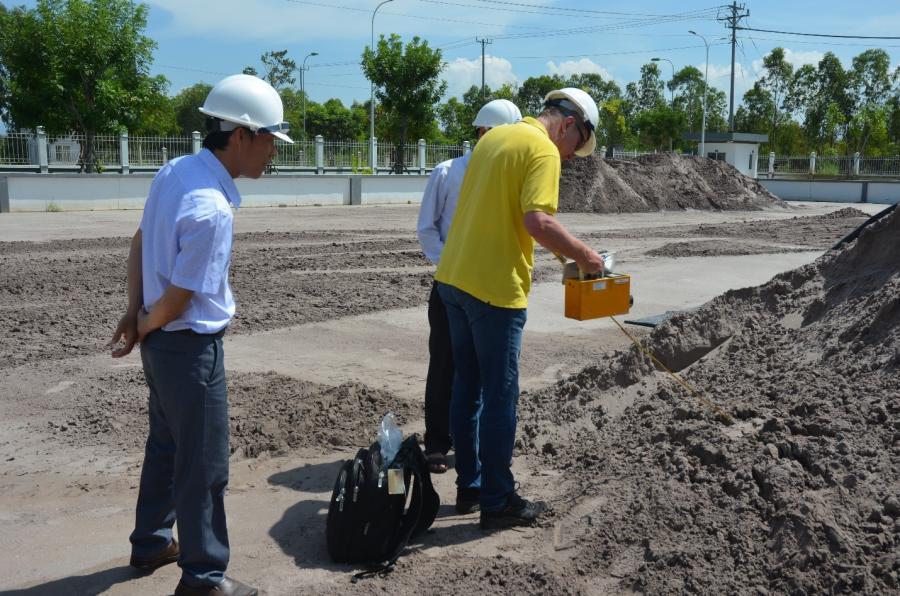
In September 2023, kick-off meetings of the project partners took place in Hanoi and Ho Chi Minh City. The project kick-off also marked the beginning of field work in Binh Thuan Province, including sampling and inventory set-up. Equipped with GPS equipment and a scintillator, a device for measuring ionizing radiation, the RENO-TITAN team traced the path of mining, concentration and purification of heavy sand minerals in an open-pit titanium mine for several hours.
With the help of the scintillator, workplace measurements of the local dose rate were carried out, i.e. the radiation dose per unit time acting on a person from the outside was determined. While no radiation-relevant measured values were determined in the open-pit titanium mine, the concentrated minerals do indeed radiate. On the other hand, initial measurements show that the sand residue and the water used for slurrying are apparently not or only slightly contaminated. Further precise radiological measurements will be carried out in specific laboratories in Germany and Vietnam in autumn/winter 2023.
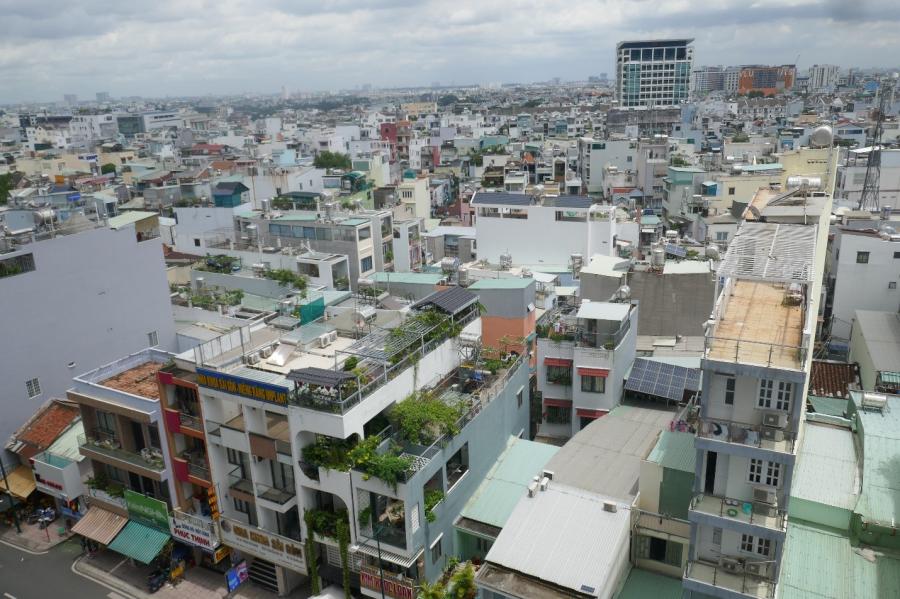
In 2024, project partners from Vietnam will visit their counterparts in Germany to discuss core aspects of the RENO-TITAN project. During the kick-off meeting in Hanoi in September 2023, some Vietnamese partners already expressed interest in other rare earth mining investigations in Northern Vietnam. Ideally, mining residues could be used as a substitute building material in urban construction, as Vietnam faces acute sand shortage. The RENO-TITAN project aims to pave the way for this circular approach.
| Voriger Beitrag | Zurück zur Übersicht | Nächster Beitrag |