Stage 01: KRONOS in Nordenham - From raw material to white pigment

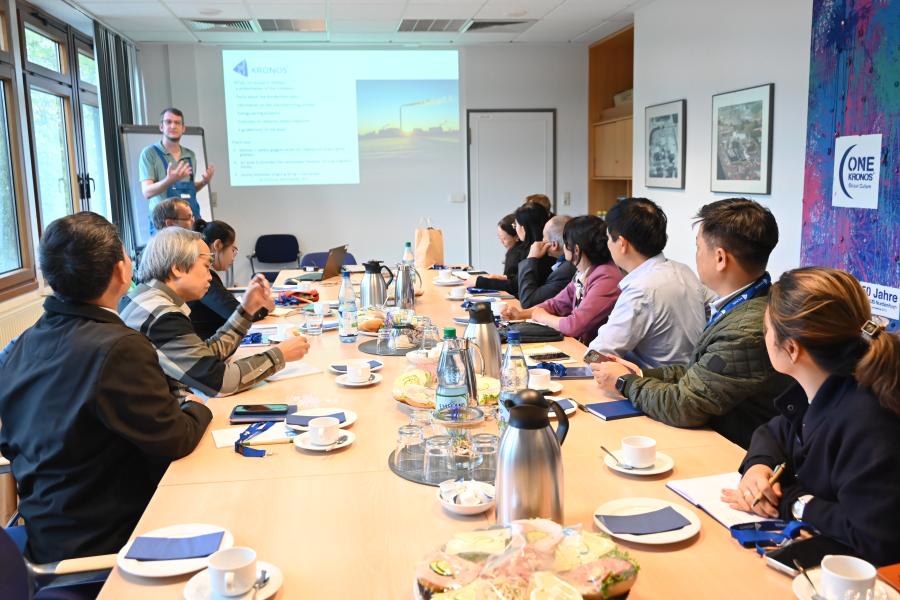
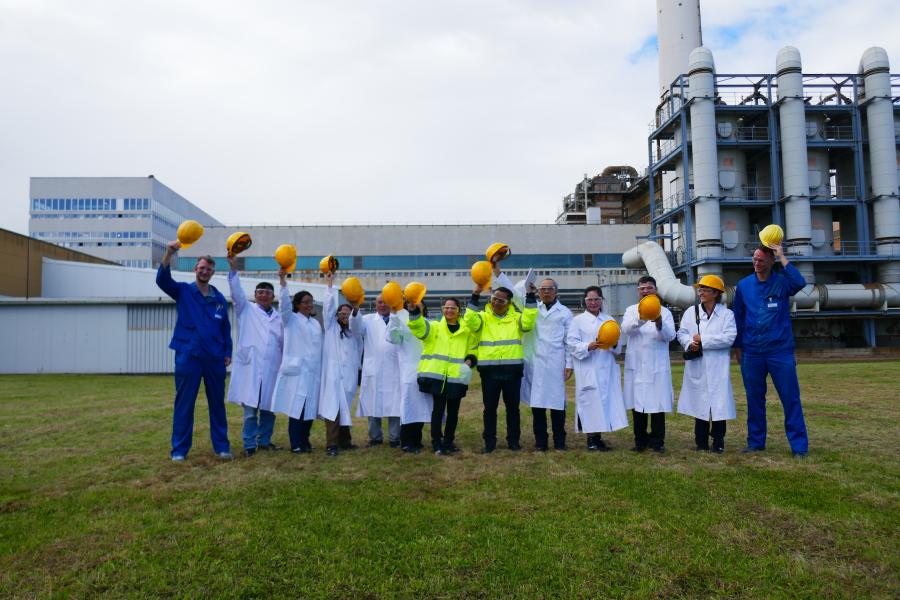
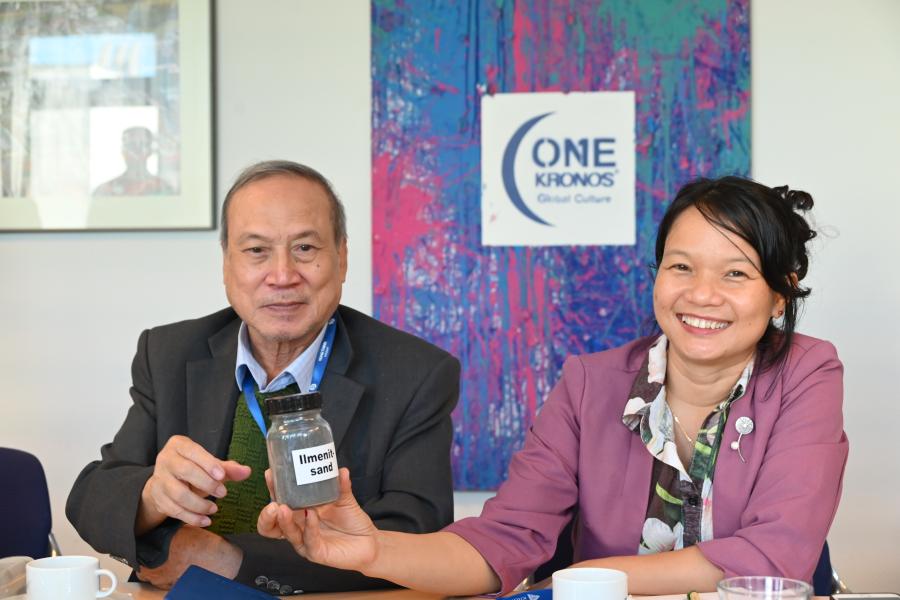
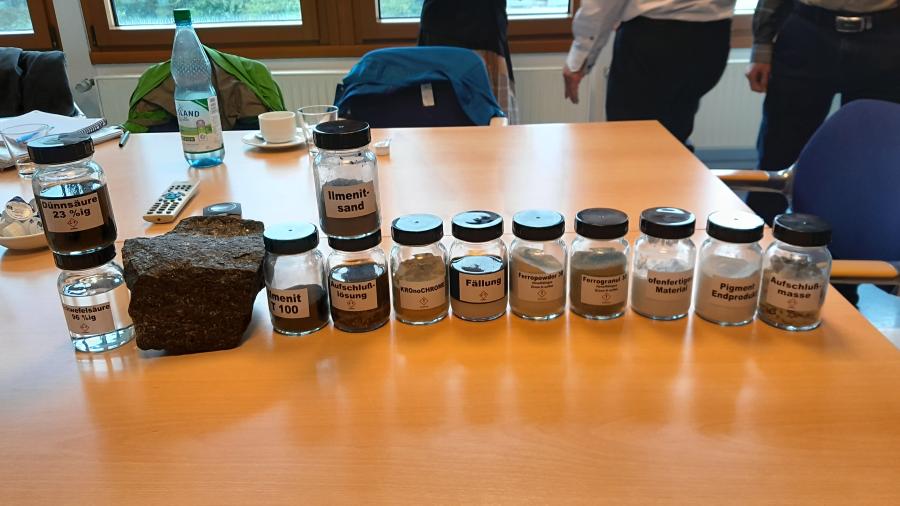
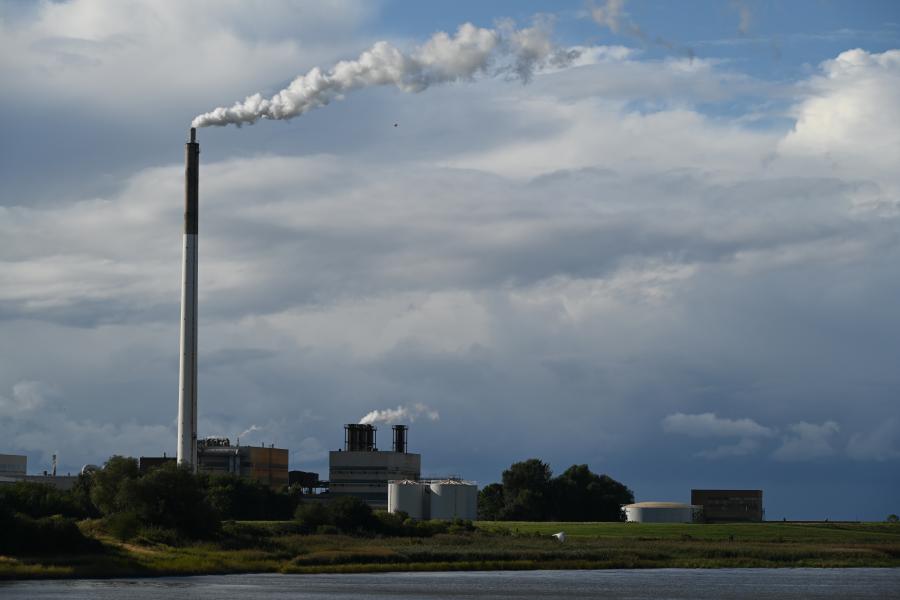
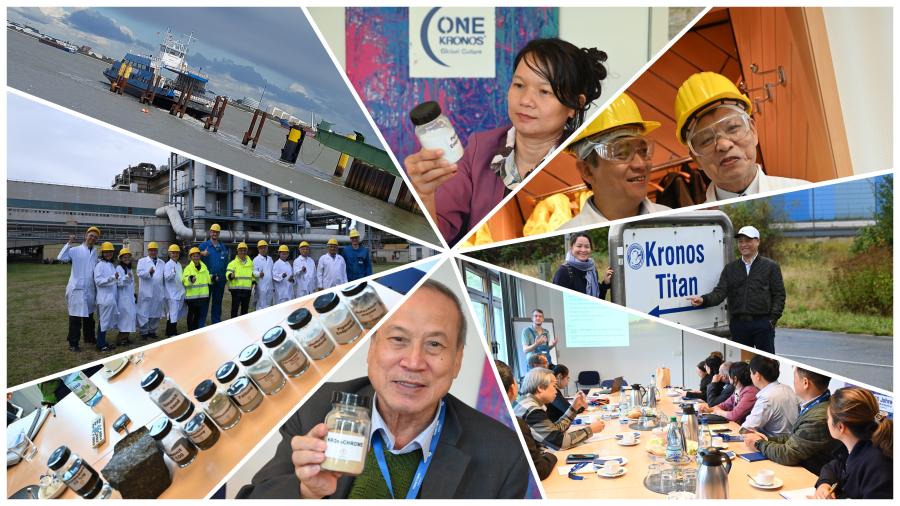
The company KRONOS TITAN in Nordenham uses the sulphate process to produce brilliant white titanium dioxide from black ilmenite, a mineral imported from Norway. A key focus of the visit was how much “circular economy” is possible in this process and how environmental considerations can be integrated.
Right at the start, the group experienced a highlight: a visit to KRONOS TITAN, a global manufacturer of titanium dioxide (TiO₂). Over 90% of the titanium-containing minerals mined worldwide are used to produce TiO₂ pigment, which provides opacity and brilliant white colour in paints, plastics, paper and cosmetics. The German site in Nordenham at the mouth of the Weser River is operated by KRONOS TITAN GmbH, whose titanium raw materials are sourced from the company's own open-cast mine in Norway.
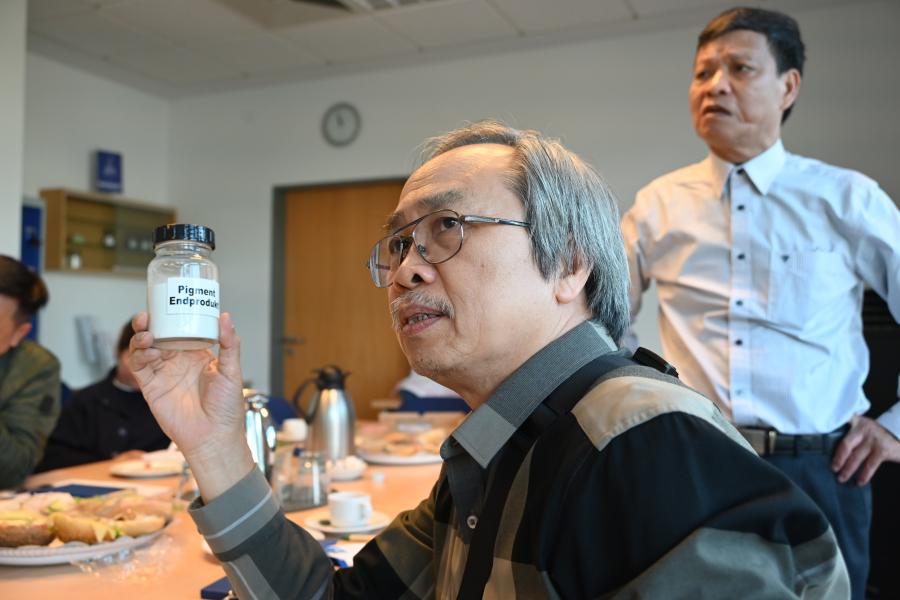
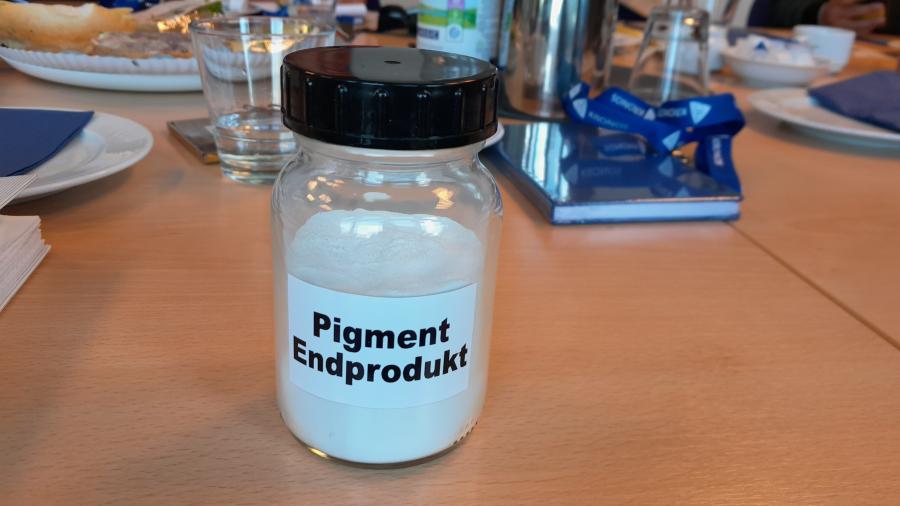
At the plant, it was explained that there are two established processes for producing TiO₂: the sulphate process and the chloride process. While the plant in Leverkusen uses the chloride process, the Nordenham site uses the sulfate process with ilmenite as the raw material. During the processing of the black titanium-iron mineral with sulphuric acid, iron components are removed and titanium oxide hydrate is obtained. Calcination, i.e. a high-temperature firing process in which bound water escapes and a stable crystal structure forms, produces the white TiO₂ pigment. Subsequent fine grinding and targeted surface treatment finally give the pigment the desired properties for its intended use.
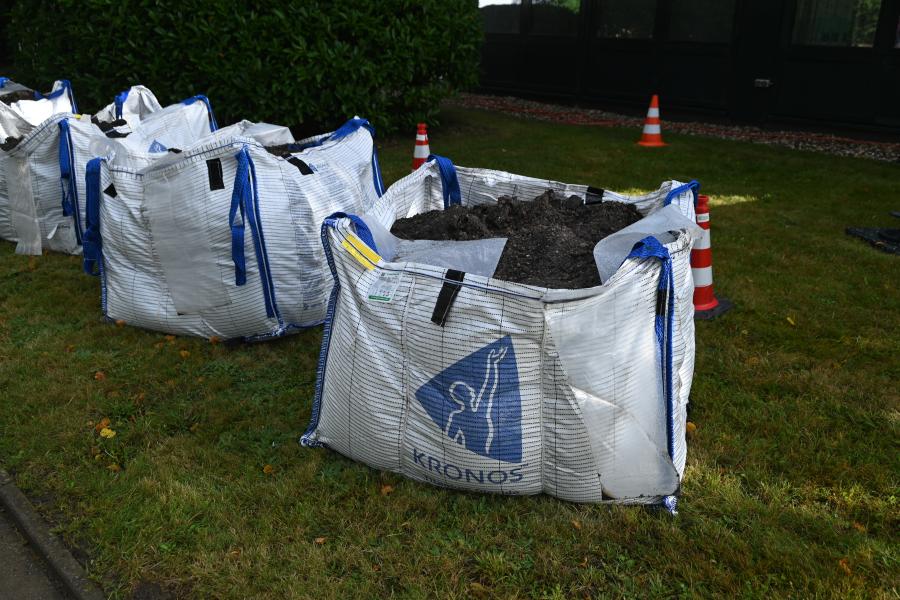
The industrial symbiosis concept at the site was a real eye-opener. Sulphuric acid is produced in the immediate vicinity, which is directly available as an important input material in the sulphate process and is kept in circulation for as long as possible. At the same time, KRONOS ecochem markets the iron salts produced in the process as by-products. These are used in wastewater treatment, where they react with dissolved phosphates to form poorly soluble iron phosphates, which settle as flakes and thus reduce the phosphorus content of the water. In the cement industry, iron(II) salts serve as reducing agents and convert problematic chromium(VI) into less soluble and toxic chromium(III). In this way, by-products are also put to good use.
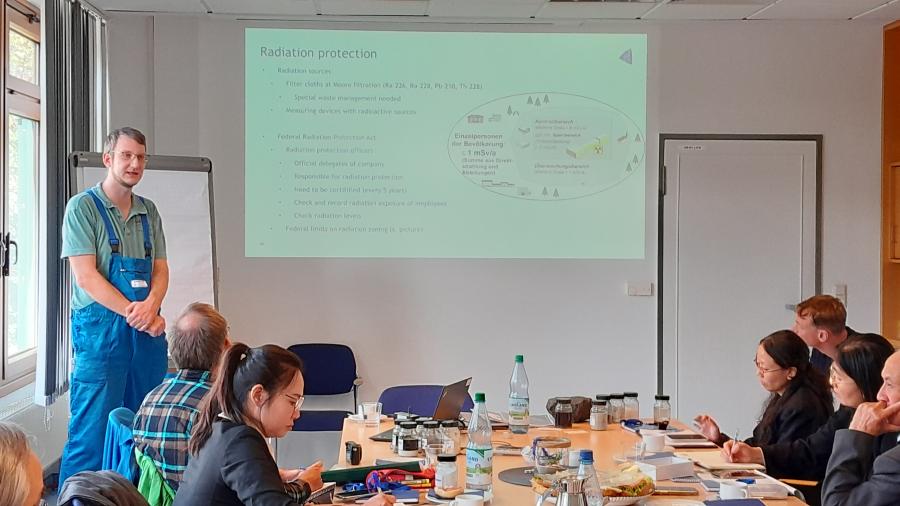
Titanium production touches on the topic of NORM because natural radionuclides from source minerals can accumulate in processing and waste streams. According to the company, however, NORM does not play a major role in the Nordenham process because the raw materials used are radiologically uncritical. Nevertheless, as is customary in German chemical plants, there are clear responsibilities for radiation protection, including a radiation protection officer. Founded in 1969, the plant now employs around 350 people working in shifts and produces around 60,000 tonnes of TiO₂ per year. The port close to the plant and the short distances to the seaports offer logistical advantages.
Materials on the topic
Subject area: KRONOS TITAN – Focus on sustainability
- Brief brochure by KRONOS ecochem providing a concise overview of by-product utilisation, particularly FeSO₄, circular solutions, and energy and environmental topics within the company.
KRONOS ecochem. (2024). Sustainability at KRONOS ecochem: Because you matter [Brochure]. Link to brochure.
- Group-wide ESG report with key figures and measures relating to governance, environmental and social matters, including energy, emissions and occupational safety.
Kronos Worldwide, Inc. (2023, Oktober 6). KRONOS ESG Report 2023. Link to the report
Subject area: TiO₂ production (including sustainability aspects) and properties
- Guide to best available techniques (BAT) for titanium dioxide production, including sulphate/chloride routes, emissions, wastewater/waste treatment and energy efficiency.
German Environment Agency. (2001, June). German notes on BAT of the production of: Large volume inorganic chemicals. Titanium dioxide. Link to the guide
- Review article on the entire TiO₂ production cycle – from raw materials and sulphate/chloride processes through to applications – with a focus on by-products/utilisation and environmental aspects.
Gázquez, M. J., Bolívar, J. P., García-Tenorio, R., & Vaca, F. (2014). A review of the production cycle of titanium dioxide pigment. Materials Sciences and Applications, 5(7), 441–458. Link to the article
- EU BREF on large-volume inorganic chemicals, including titanium dioxide, with described BAT techniques, chapters on sulphate/chloride processes and detailed measures for reducing emissions and wastewater.
European IPPC Bureau. (2007). LVIC-S BREF: Large volume inorganic chemicals – solids and others. Link
- Encyclopaedic overview of inorganic white pigments, particularly TiO₂, covering properties, raw materials, production processes, quality criteria and applications.
Auer, G., Woditsch, P., Westerhaus, A., Kischkewitz, J., Griebler, W.-D., & De Liedekerke, M. (2017). Pigments, Inorganic: 2. White Pigments. In Ullmann’s Encyclopedia of Industrial Chemistry. Wiley-VCH. Link to the chapter
Subject area: Radiation protection in TiO₂ production (NORM)
- BfS – ‘Further information for specialists’. Overview page with guidance and materials for estimating radiation exposure from common NORM substances in Germany, including further references.
Federal Office for Radiation Protection (BfS). (n.d.). NORM - Further information for specialists. Link to the website
- Overview of TiO₂ production with a particular focus on NORM issues (natural radioactivity of the input materials), material flows, and the resulting safety and environmental aspects.
McNulty, G. S. (2008). Production of titanium dioxide. In: International Atomic Energy Agency (Ed.), Naturally occurring radioactive material (NORM V): Proceedings of an international symposium (Seville, Spain, 19–22 March 2007) (pp. 169–188). IAEA. Link to the article
- IAEA Safety Report on radiation protection and the management of NORM residues in the titanium dioxide and related industries, with an overview of processes, exposure pathways, monitoring and regulatory assessment.
International Atomic Energy Agency. (2012). Radiation protection and NORM residue management in the titanium dioxide and related industries (Safety Reports Series No. 76). Link to the report
- Article presenting a graded methodological approach to systematically assess exposure situations in NORM-affected industries and derive appropriate radiation protection measures from them.
Trevisi, R., Ampollini, M., Bogi, A., Bucci, S., Caldognetto, E., La Verde, G., Leonardi, F., Luzzi, L., Nuccetelli, C., Peroni, I., Picciolo, F., Pratesi, G., Trotti, F., Ugolini, R., Venoso, G., & Pugliese, M. (2023). Radiological protection in industries involving NORM: A (graded) methodological approach to characterize the exposure situations. Atmosphere, 14(4), 635. Link to the article
- Study determining the distribution of U/Th radionuclides along the titanium dioxide production process (raw materials, products, by-products and waste streams) and deriving the potential environmental/exposure relevance from this.
Mantero, J., Gazquez, M. J., Bolivar, J. P., Garcia-Tenorio, R., & Vaca, F. (2013). Radioactive characterization of the main materials involved in the titanium dioxide production process and their environmental radiological impact. Journal of Environmental Radioactivity, 120, 26–32. Link to the article
- Presentation slides on determining occupational radiation exposure in a south-western Spanish TiO₂ sulphate plant (material characterisation, gamma dose rates, inhalation/Rn-222), finding that effective doses under normal conditions are < 1 mSv/year.
Bolivar, J. P., Garcia-Tenorio, R., Mantero, J., Gazquez, M. J., & Lozano, R. (2010, March). Occupational exposure assessment in a titanium dioxide plant located at the south-west of Spain [Konferenzvortrag]. NORM VI Conference, Marrakech, Morocco. Link to the presentation
- Conference paper assessing external (γ) and internal (inhalation) occupational radiation exposure in a Spanish TiO₂ sulphate plant; result: < 1 mSv/year under normal operating conditions, with precautionary measures during maintenance work.
Bolívar, J. P., García-Tenorio, R., Mantero, J., Gázquez, M. J., & Lozano, R. (2011). Occupational exposure assessment in a titanium dioxide plant located in the south-west of Spain. In: International Atomic Energy Agency (Ed.), Naturally occurring radioactive material (NORM VI): Proceedings of an international symposium (Marrakesh, Morocco, 22–26 March 2010) (pp. 109–117). IAEA. Link to the article
- Conference paper assessing external (γ) and internal (inhalation) occupational radiation exposure in a Spanish TiO₂ sulphate plant; result: < 1 mSv/year under normal operating conditions, with precautionary measures during maintenance work.
Gázquez, M. J., Mantero, J., Mosqueda, F., Vioque, I., García-Tenorio, R., & Bolívar, J. P. (2021). Radiological and chemical risks by waste scales generated in the titanium dioxide industry. Chemosphere, 274, 129732. Link to the article

| Voriger Beitrag | Zurück zur Übersicht | Nächster Beitrag |